ServicesCommercial Roofing
Commercial Roofing in Signal Hill, Planned Before the Roof Forces It
We repair, recoat and replace low-slope roofs on shops, offices, warehouses and small multi-unit buildings. You get a roof inspection, a written estimate and a plain answer on what needs doing this year and what can wait for next year's budget.
What we do on commercial roofs
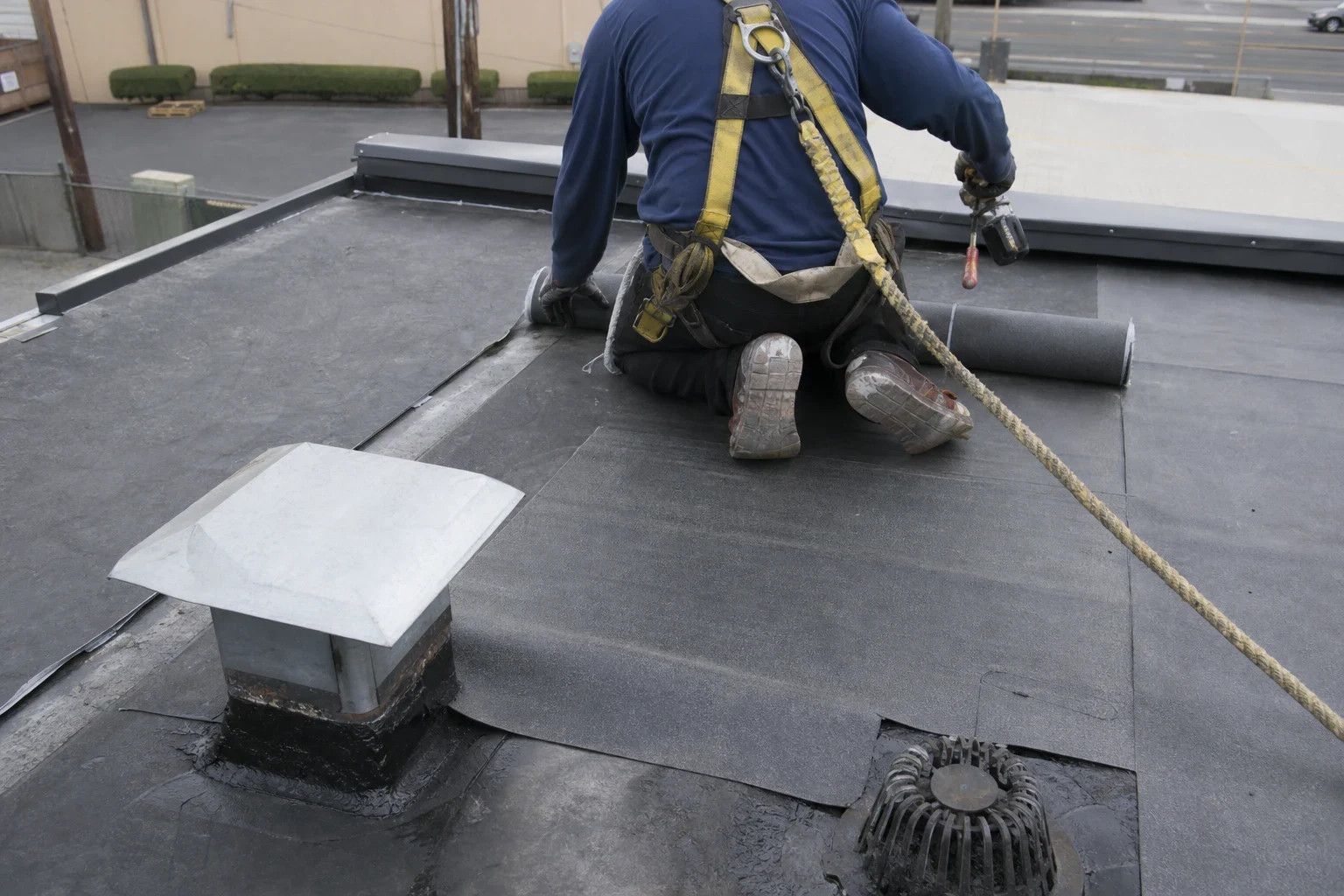
Most commercial roofs we see are low-slope. TPO, modified bitumen, built-up tar and gravel, or an older roof that has been coated a few times. They fail in the same places. Seams open up, flashing pulls away at parapet walls, and water sits around drains and rooftop units long after the rain stops.
Our job is to catch those spots while they are still small repairs, and to give you a clear timeline for the bigger work. A building owner who knows the roof has three good years left can plan for it. One who finds out from a stained ceiling tile can't.
The long dry season hides problems. Sun breaks down membranes and sealants all summer, and the first winter storms show where they gave out. We'd rather look at your roof in the fall than hear about it in January.
What the work includes
- 01
Roof survey and core check
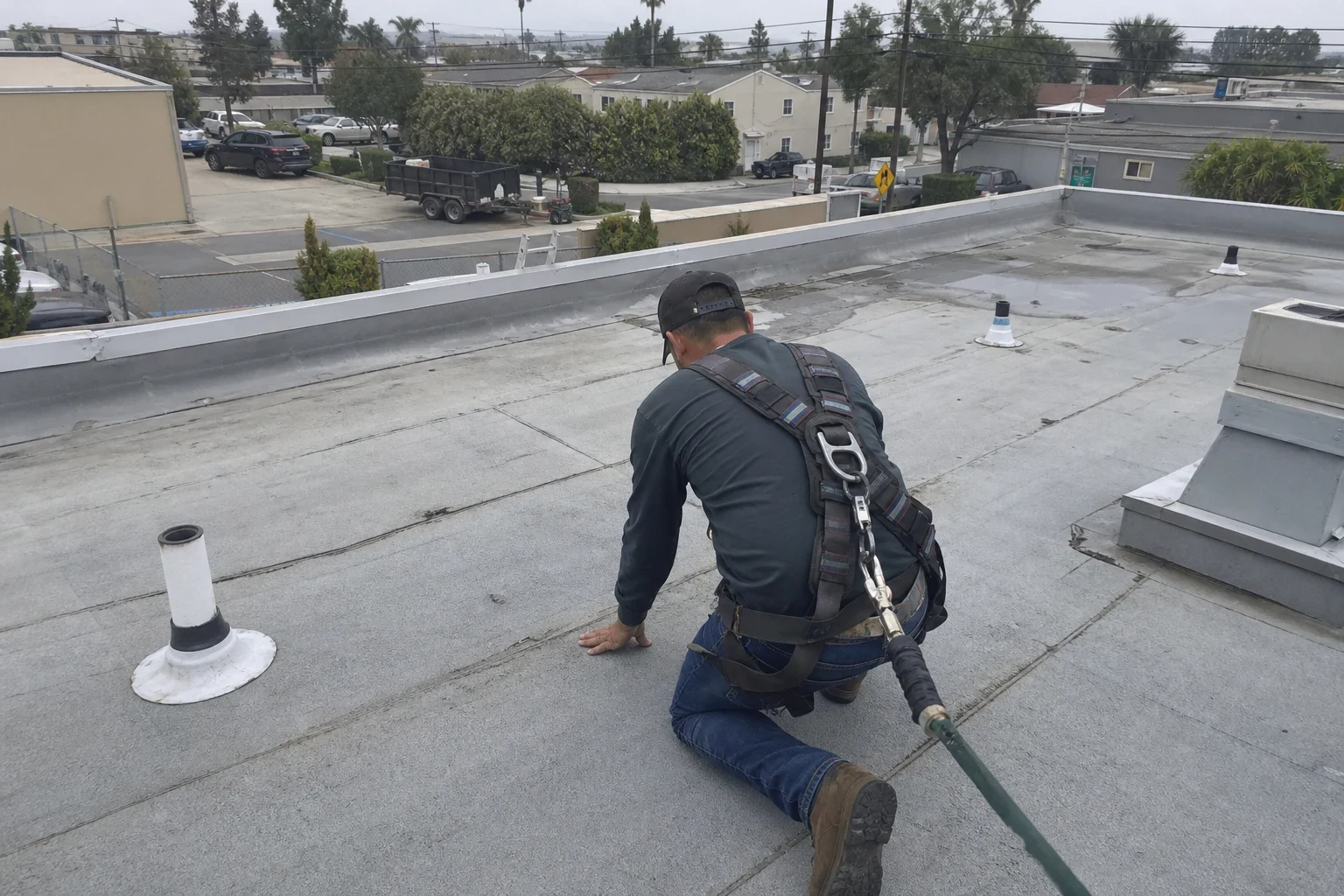
We walk the whole roof and check every seam and penetration. Where we need to know how many layers are underneath, or whether the insulation is wet, we cut a small core sample and patch it. You get photos of what we found.
- 02
Seams, flashing and penetrations
Open seams, cracked pitch pans, loose counterflashing and failed sealant around pipes and HVAC curbs. These are the leaks that show up inside first. Most can be fixed without touching the rest of the roof.
- 03
Drains, scuppers and ponding
We clear and check drains, scuppers and gutters, and look for low spots where water stands for days. Standing water ages a membrane fast, so we tell you what it takes to fix the slope.
- 04
Restoration coatings
When the membrane is sound and the insulation is dry, a coating can add years for less than a tear-off. If the roof is too far gone for that, we say so.
- 05
Full replacement
Tear-off, new insulation where it's needed, and a new membrane, with the permit pulled and inspections scheduled. California's energy code often calls for a reflective cool roof surface on low-slope reroofs, and we build that into the plan from the start.
Questions about Commercial Roofing?
Call(562) 543-0704Warning Signs on a Commercial Roof
Marked ceiling tiles
A brown ring on a drop-ceiling tile often means water has been coming in for some time. The actual leak may sit several feet from the mark.
Standing water long after a storm
Water still on the roof two days after rain means the drains or the slope are not working as they should.
Bubbling, blistering or cracks
Bubbles on a built-up or modified roof point to trapped moisture. A cracked, chalky gray single-ply surface means sun has worn it down.
More patch than roof
Once patches outnumber the original surface, it makes more sense to plan the next step than to add another repair.
Warm spaces or tenant reports
Soaked insulation no longer insulates. When top-floor spaces run hot or tenants keep mentioning drips, the roof is often part of it.
How a commercial roof job runs
- 1
Inspection and photos
We pick a time that works around your tenants or business hours, get on the roof and photograph what we find. Then we walk you through it on site or by phone.
- 2
Written estimate with a timeline
You get a free written estimate broken out line by line. We split it into what needs doing now and what can be planned for later, so you can budget across a year or two.
- 3
Scheduling around your operation
We plan loud tear-off work and material deliveries around your hours where we can. You know ahead of time which days the crew will be up top and which parts of the lot we'll need.
- 4
Work, cleanup and final walk
Each section gets dried in before the crew leaves for the day, and debris stays off walkways and parking. When we finish, we clean up the lot and show you the completed roof in person or in photos.
What Drives the Price of Commercial Roof Work
Commercial roofs are priced by square footage, but what sits on the roof and what lies beneath it set the real cost. Each item appears on your estimate so nothing comes up later. If you want to spread out a replacement, financing is available through Service Finance Company, subject to credit approval.
- Roof area and existing layers
- Larger roofs cost more, and each old layer removed adds labor and dump fees. Code caps the number of layers allowed, so adding another layer on top is not always an option.
- Soaked insulation
- When core samples find wet insulation, that area must be replaced. Finding it early keeps the damaged section small.
- Equipment on the roof
- Each HVAC unit, vent, skylight and conduit run needs its own flashing. A busy roof takes more time to finish properly.
- Type of membrane
- TPO, modified bitumen and coatings differ in price and in how long they last. We lay out the trade-offs for your building.
- Site access and permits
- Cramped lots, alley entry, crane work and the city permit all count. We pull the permit and build it into the price.
Questions About Commercial Roofs
Can my business stay open while you work?
Usually, yes. Repairs and coatings are quiet and stay on the roof. Tear-offs make more noise, so we plan timing, entrances and parking with you ahead of time.
Does a coating do the same job as a new roof?
Not in every case. Coatings work on a membrane that is still solid with dry insulation beneath it. If the insulation is soaked or seams are failing all over, a coating only covers up the trouble, and we will say so from the start.
How early should I start planning a replacement?
One to two years ahead works best. Once we inspect the roof, we can estimate roughly how much life it has left. Then you can save up and choose a start date in the dry season rather than responding to a leak.
Can you help with an insurance claim after a storm?
Yes. We work directly with your insurance claim, recording the damage with photos and measurements and meeting the adjuster when that is useful. Coverage is the adjuster's call. We make sure they see what is actually on the roof. See our Storm Damage Repair page for how the process works.
Get the next few years of your roof on paper
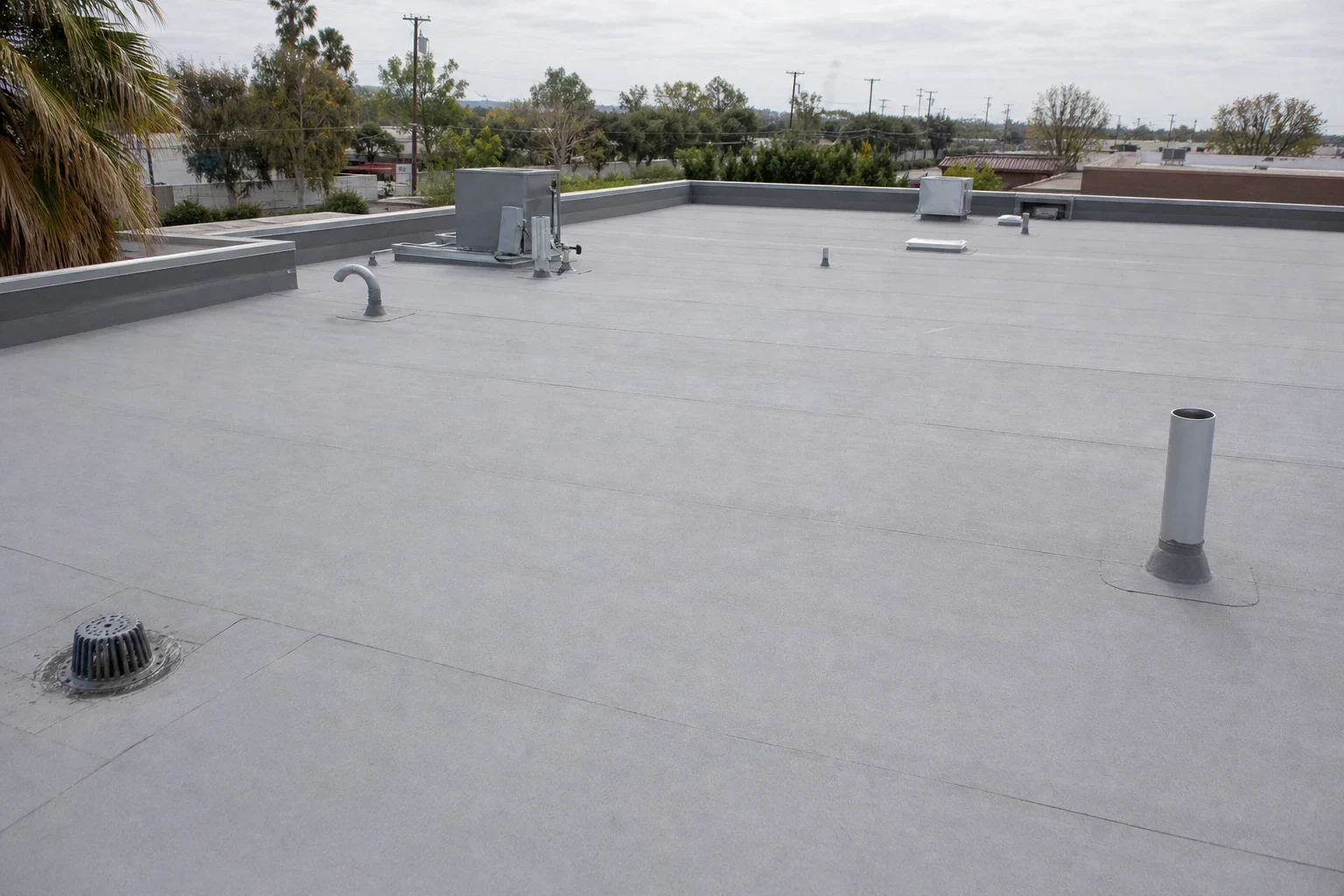
We'll inspect the roof, show you photos and give you a written plan that separates what's urgent from what can wait. The visit costs you nothing.