ServicesHail Damage Repair
Hail Damage Repair in Signal Hill
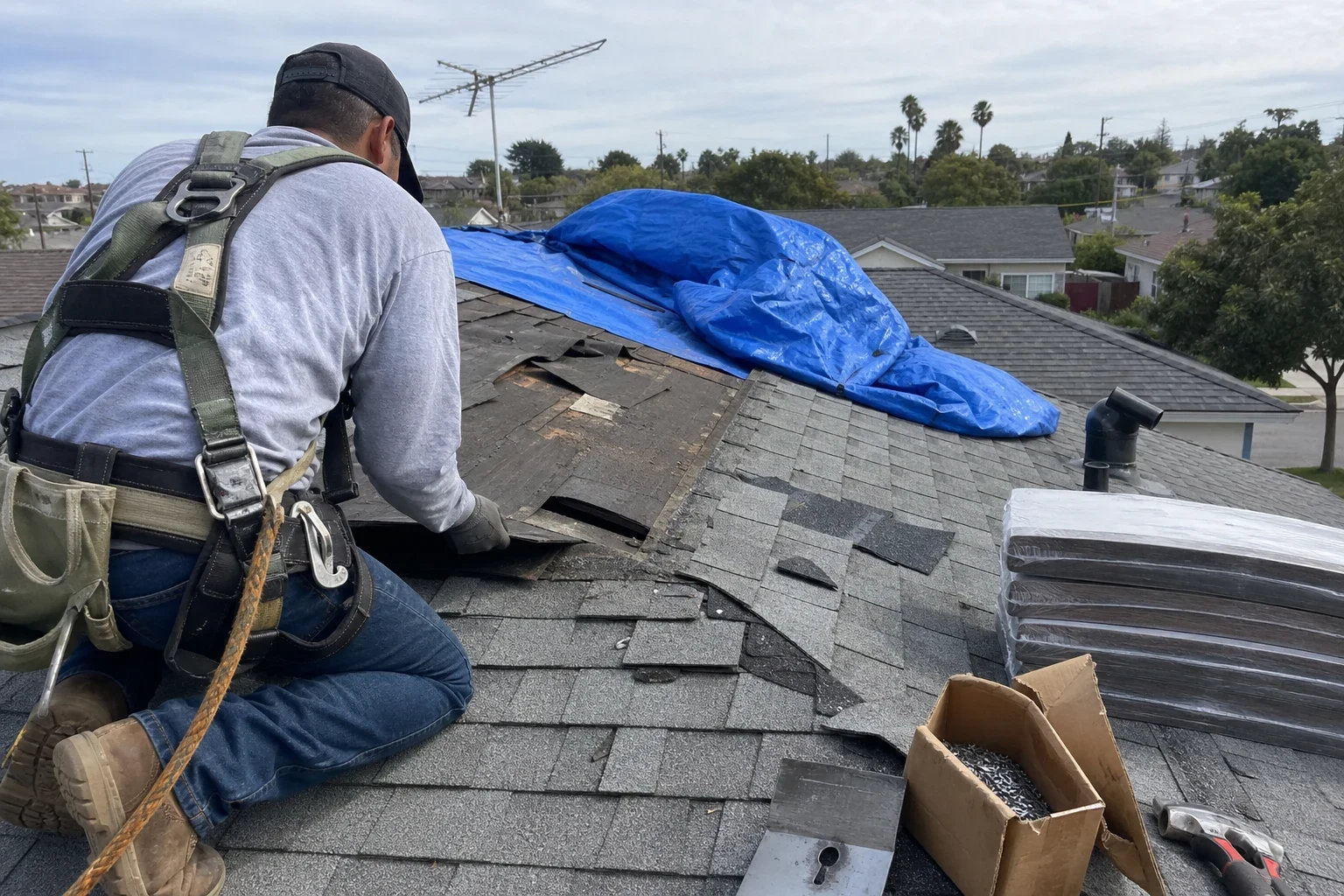
Hail rarely leaves a hole. It bruises shingles, cracks tile and dents metal, then the roof wears out faster. We find every hit, show you photos, and give you a written plan so the repair happens on your schedule, before a leak decides it for you.
What Hail Does to a Roof, and When to Fix It
Most hail damage is quiet. A hailstone knocks the granules off an asphalt shingle and leaves a soft, dark spot. That spot dries out in the sun and cracks a few seasons later. On tile, a hit can leave a hairline crack you can't see from the yard. The roof looks fine from the driveway, so the damage sits until water finds it.
Hail doesn't come often here, but when a winter storm drops it, the same storm usually brings rain right behind it. That's why we like to look soon after. A small repair done now costs less than a leak into the attic later, and you get time to plan the money side instead of reacting to a stain on the ceiling.
Sometimes the damage is widespread enough that patching makes no sense. We'll tell you that straight. If a full roof replacement is the honest answer, we'll show you why with photos, not just say it.
What Our Hail Repair Work Includes
Every hit found and marked
We cover the entire roof and mark each impact. You receive photos of the damage, with close-ups beside a coin or tape measure to show the size.
New shingles and tile
We take out bruised or cracked shingles and nail and seal new ones in properly. Broken tiles are replaced, and we inspect the underlayment while they are off.
Vents, flashing and other metal
Hail dents vents, pipe collars and flashing. A dented collar can crack and leak, so we replace damaged pieces rather than bend them back.
Gutters and downspouts
We look for dents and loose hangers and check for shingle granules collecting in the gutters. If repairs are needed, our gutters service takes care of them during the same visit.
Support with your claim
We work directly with your insurance claim. You get our photos and a written estimate, and we can join the adjuster on the roof. Coverage remains the adjuster's decision.
Signs Hail May Have Hit Your Roof
Granules at the downspouts
A pile of gritty, sand-like granules where your downspouts drain is a common sign. Those granules protect the shingle from sun.
Dents on metal around the house
Look at your AC unit fins, mailbox, gutters and patio cover. If they took hits, your roof did too.
Cracked or chipped tiles
Broken corners or small cracks on tile, even a few, are worth a closer look. Water can slip through to the underlayment.
Dark, soft spots on shingles
Round spots where the granules are gone feel slightly spongy. They're easy to miss from the ground.
A new stain after the next rain
If a ceiling or attic stain shows up after a storm that brought hail, a damaged spot above it is likely letting water through. Our roof leak repair page covers that side of the work.
How a Hail Repair Job Goes
- 1
You call, we set a time
Tell us when the storm hit and what you've noticed. We pick an inspection time that works for you.
- 2
We inspect and photograph
We go up, mark the hits and take photos. Then we sit down with you and go through them, so you see what we saw.
- 3
Written estimate and next steps
You get a free written estimate with each repair listed. If you're filing a claim, we give you the paperwork you need and can meet your adjuster.
- 4
Repair day and cleanup
We cover plants and walkways, do the repair, and sweep the yard and driveway for nails and debris before we leave. Most hail repairs on a single home are done in a day.
What Sets the Price of a Hail Repair
We price each hail job from what turns up on your roof, with every item on its own line. Some owners pay directly, some use insurance, and some use financing through Service Finance Company, subject to credit approval. Seeing the number early is what makes planning possible.
- How widespread the hits are
- A handful of bruised shingles on a single slope is a quick job. Damage across every slope can make replacement the better answer.
- What your roof is made of
- Shingle repairs cost less than tile. Tile has to be lifted and reset with care so the neighboring pieces don't break.
- Finding a match
- Older shingle colors and tile styles go out of production. When a close match is hard to get, it changes the price and the look of the repair.
- Damage below the surface
- If water has already gotten in, the underlayment or decking may need repair as well. We can't tell until we look, and we show you before doing that work.
- Metal pieces and gutters
- Dented vents, flashing and gutters add to the work. They are typically a small share of the cost, but they help keep water out.
Common Questions About Hail Damage
Something not covered here? (562) 543-0704
We hardly ever get hail. Is a check worth it?
If you could hear hail hitting the roof, it's worth having it looked at. Even small stones can strip granules from older shingles. Since the inspection is free, all it costs you is a bit of time.
Do I call my insurance company or you first?
Plenty of homeowners start with us. We inspect and hand you photos and an estimate, so you can tell whether the damage is enough to justify a claim. The decision is yours. We are not your adjuster, but we work directly with your claim if you file one.
Will the new shingles or tile match mine?
Many times they will, and sometimes they come close. We bring samples and give you an honest idea of how the match will look before we begin. If a slope can't be matched, we go over the options with you.
Does hail damage mean a new roof?
Usually not. Here, most hail work is repair. If hits cover the whole roof, or the roof was already near the end of its life, we explain why replacing it could be the better choice and price both.
How long do I have to report hail damage?
Many policies set a time limit, and it differs from one to the next. Look at your policy or ask your agent. An inspection soon after the storm keeps your choices open.

Get the Hail Hits Found Before the Next Rain
A free inspection tells you what hail did and what it will take to fix. Then you can plan the repair and the budget, not scramble for them later.