ServicesGutters
Gutters in Signal Hill, Planned Before the Wet Season
We install one-piece gutter runs, fix sagging sections and reroute downspouts so roof water ends up away from your walls and foundation. Most of our gutter work happens in the dry months, when you can plan it, price it and get it done without water pouring over the edge.
What New Gutters Really Solve
Gutters collect the water coming off your roof and send it to a downspout that releases it away from the house. If a run sags, leaks at a seam or empties right next to the wall, that water soaks the fascia, marks the stucco and collects at the foundation.
Our weather can stay dry for months, which keeps gutter trouble hidden until the first big winter storm. Then it all appears in a single afternoon. We prefer to check your gutters in late summer or early fall, tell you what is working and what isn't, and leave you time to budget.
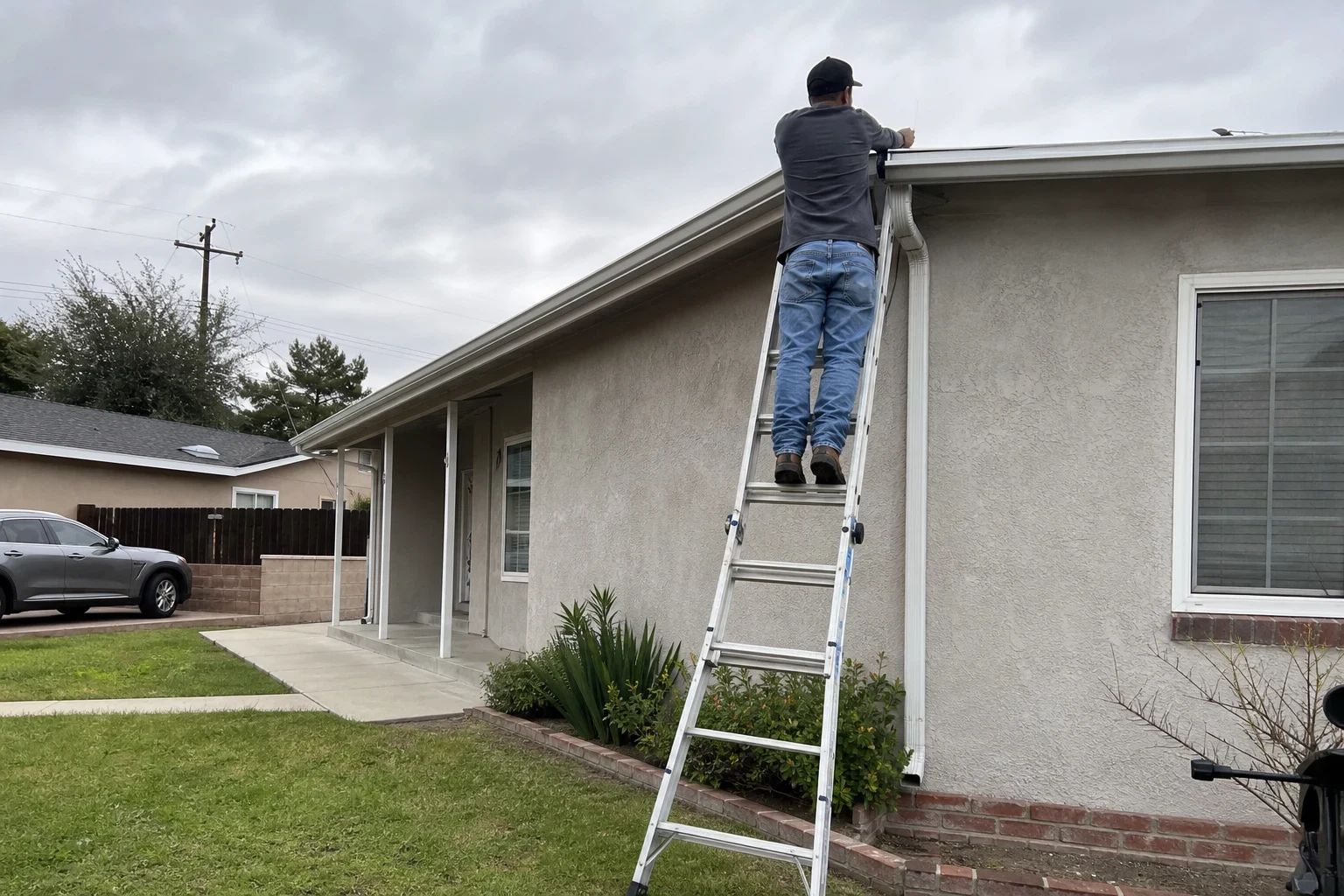
We check the roof edge as well. A gutter depends on the board behind it and the drip edge above it, so we look at both before we give you a price.
What Our Gutter Work Includes
- 01
One-piece aluminum runs
A machine parked at your curb rolls flat coil stock into gutter, and we cut every piece to match the exact wall it will hang on. With no joints in the middle of a run, water has fewer places to get out. The only seams are at the corners and end caps, and we seal each one.
- 02
Downspouts and drainage
We place downspouts where the water volume calls for them and add extensions or splash blocks so the flow lands a few feet out from the wall. If a downspout dumps onto a walkway or a neighbor's side yard, we'll point that out and offer a better route.
- 03
Fascia and roof edge repair
Soft or rotted fascia boards get replaced before new gutters go up. Hanging new gutters on bad wood just means they pull loose later.
- 04
Proper slope and hangers
We set a steady fall toward each downspout and fasten with hidden hangers spaced close enough to carry wet leaves and a full gutter of water.
- 05
Repairs and reattachment
Not every gutter needs replacing. Loose sections, leaking end caps and pulled hangers can often be fixed for a fraction of a new system, and we'll tell you when that's the case.
Questions about Gutters?
Call(562) 543-0704When Your Gutters Are Due for a Look
Rain pouring over the edge
Water running over the lip in a storm means the gutter is blocked, too small or pitched the wrong way. Each of those can be fixed.
A sagging or tilted run
A gutter that sinks in the middle or leans out from the house has loose hangers or soft fascia behind it.
Streaks and flaking paint under the gutter
Dark lines on the stucco, trim paint coming off or a rust stripe below the run tell you water is escaping in the wrong place.
Pooling or eroded soil along the house
Water gathering at the foundation after rain is most often caused by a downspout extension that is too short or missing.
Leaks at joints and corners
Sectional gutters start leaking at each joint once the sun dries out the sealant. Today's drips become tomorrow's rotted boards.
How a Gutter Job Goes
- 1
A look at the roof edge
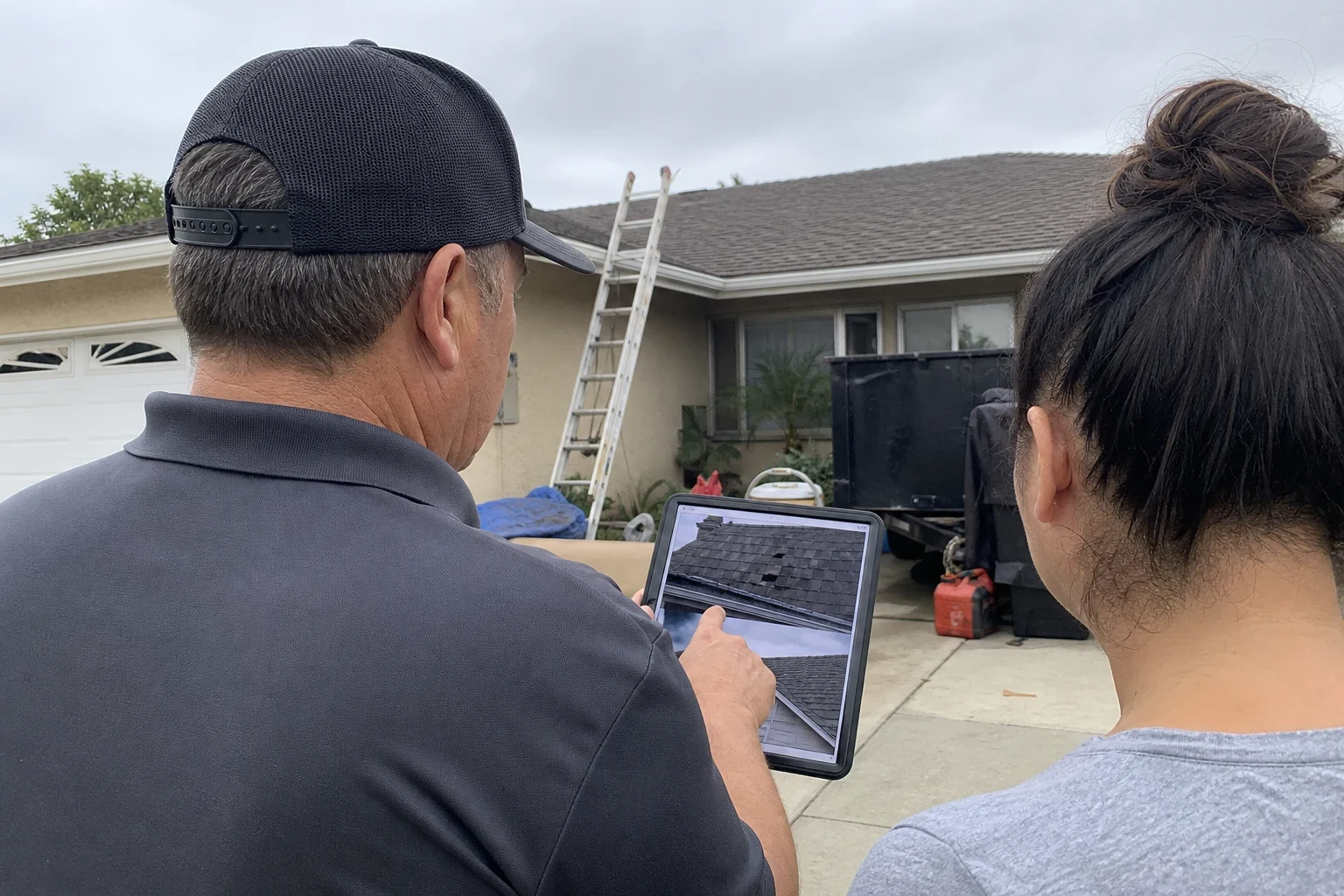
We walk the outside of your home, check the gutters, fascia and drip edge, and take photos of anything worth fixing. You see what we see.
- 2
Written estimate you can plan around
You get a free written estimate with the gutter footage, downspouts and any wood repair listed out. If now isn't the time, keep it and use it to budget for later in the year.
- 3
Install day
We take down the old gutters, swap out any bad fascia, then form and hang the new runs. Most homes are done in a day, and we keep ladders off your plants as best we can.
- 4
Water test and cleanup
We run water through each run to check the slope and the downspouts, then pick up old metal, screws and debris before we leave.
What Sets the Cost of a Gutter Job
The price depends on how much gutter you need and the condition of the roof edge. Each item goes on your written estimate so there are no surprises. If spreading out payments helps, financing is available through Service Finance Company, subject to credit approval.
- Length of run and number of corners
- More footage and more corners mean more material and more time.
- Shape of the fascia boards
- Solid wood keeps things simple. Rotted boards must be replaced first, and the amount isn't clear until we inspect up close.
- How high and how easy to reach
- Two-story walls and narrow side yards need more setup than a one-story front.
- Number and path of downspouts
- Added downspouts, longer extensions or routing water around patios and driveways raise the total.
- Size and style of gutter
- Oversized gutters carry heavy rain off large roof sections better and cost slightly more than standard ones.
Common Questions About Gutters
What time of year should I replace my gutters?
Between late spring and early fall. It's dry, dates are easier to get and the job is finished before winter storms. If you wait until water is already overflowing, you often end up repairing wood damage as well.
Just a few spots on my gutters are bad. Do I need to replace all of them?
Most of the time, no. A loose hanger, a leaky end cap or a single bent piece can be fixed on its own. If joints leak along the whole run or the metal is thin and dented, new gutters are cheaper in the long run, and we will explain why.
Does a tile roof need gutters?
Tile sheds a lot of water quickly, so gutters keep it off your walls and away from the foundation. We position the gutter to catch water coming off the tile edge without getting in its way. Our Tile Roofing page explains more about how tile roofs drain.
Do you check the roof while you're working on the gutters?
Yes. We look at the shingles or tile along the edge, the drip edge and any visible flashing. Anything that needs work gets photographed and noted, and you decide whether to handle it now or plan for it later.

Get Your Gutters Sorted Before the First Storm
We'll look at your gutters and roof edge, show you what we found and put the numbers in writing. We work in Signal Hill and nearby towns like Long Beach and Lakewood.